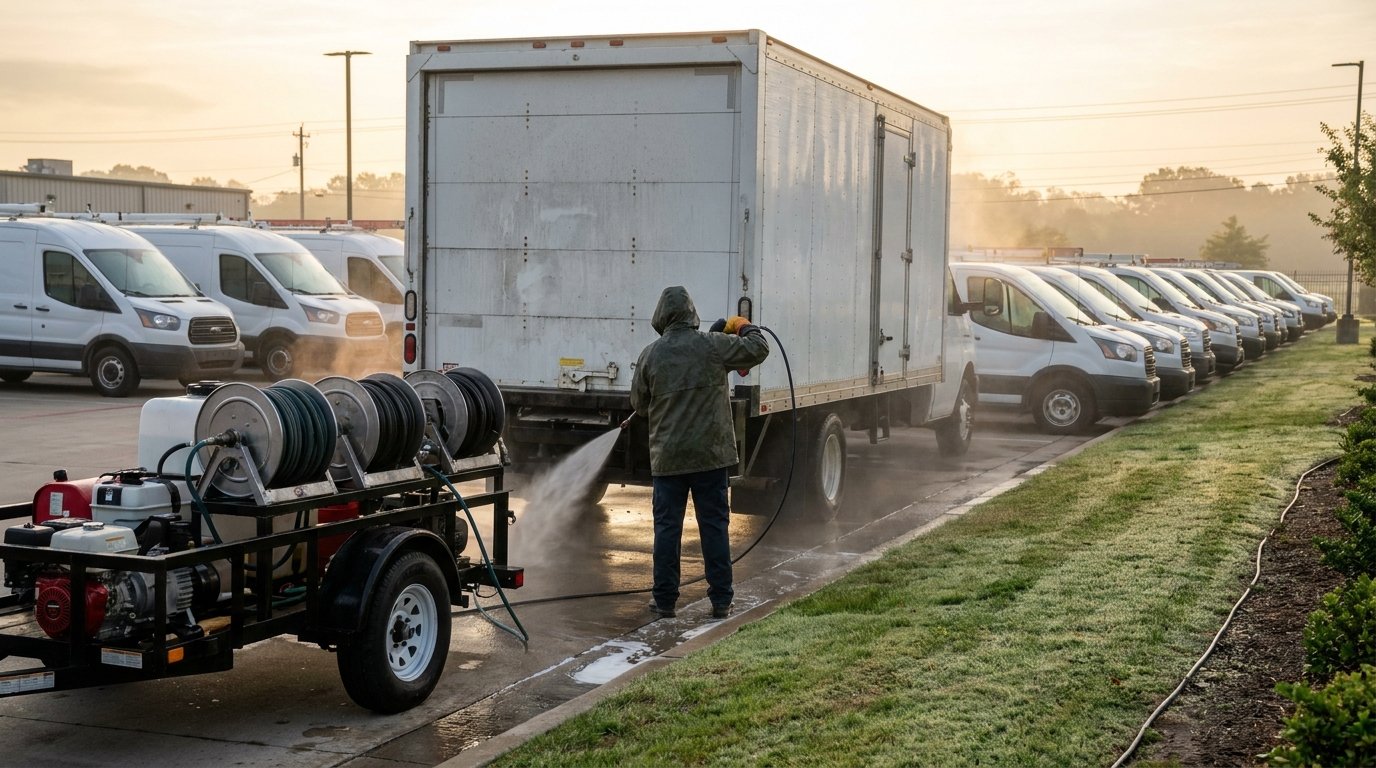
Fleet washing has a part nobody photographs: where the water goes when the truck is clean. It matters more than most operators realize — stormwater rules treat wash water as a discharge, and the enforcement letter goes to the property, not just the vendor. Here's the operator-level version of what to know, and what to ask.
Why wash water is regulated at all
Storm drains in Florida generally flow to lakes, canals and the aquifer — not to treatment. Wash water off a fleet carries detergents, road film, oils and heavy-metal brake dust, which is why the Clean Water Act's stormwater framework and many local ordinances restrict sending it down the drain. Rules vary by municipality and site, but the direction is consistent everywhere: keep wash water out of the storm system.
What responsible mobile washing looks like
- Site assessment first: where are the drains, where does the pavement slope, is there a landscaped or permeable area, does the yard have an oil-water separator or a designated wash area?
- Water management matched to the site: depending on the yard, that can mean berms and mats to control flow, directing rinse water to landscaping or retention where appropriate and permitted, using low-flow methods that minimize runoff in the first place, or capture where the site demands it.
- Chemistry chosen for the setting: biodegradable, properly diluted detergents — and honest limits on degreasing work near open drains.
- Paper trail: a vendor who documents what they did protects you when anyone asks.
Questions that separate pros from problems
Ask any prospective vendor: Where will the wash water go on MY site? What's in your detergent? What do you do differently when a yard drains straight to the street? Have you worked sites with oil-water separators? Can you wash at night without lighting the neighborhood? Vague answers to the first two questions are a preview of the letter you might get later.
Your side of the checklist
Know your own site before the walkthrough: drain locations, slope, any wash-area infrastructure, water spigot access, and whether your lease or your municipality has specific requirements. Ten minutes of prep turns the vendor conversation from sales pitch to site plan.
We build fleet washing programs around a site assessment for exactly these reasons — schedule a walkthrough and we'll map the water plan with the wash plan, in writing.
Questions, answered
Can fleet wash water legally go into a storm drain?
Who's liable if a washing vendor's runoff causes a violation?
Does every site need water capture equipment?
What should be in a fleet washing agreement about water?
Want it handled by the Titans?
Free, same-day quote on most jobs. All we need is your address.
Request sent!
We'll reach out shortly. Need us now? Call (321) 321-9692.